

- Address both partners by first name, congratulate them, add one personal thought, then close with a warm wish.
- Keep a card message to three to five sentences, about 30 to 75 words, and shorter for a colleague.
- Skip divorce, money, former partners, and in-law tensions, and never assume a surname.
- Tie the wish to one specific moment you shared because a concrete detail lands better than general praise.
Table of Contents
- Wedding Wishes to the Couple: Words That Actually Land
- Short, Heartfelt Wishes Need One Specific Detail
- Friends, Family, and Colleagues Each Need a Different Tone
- Humour, Faith, and Quotations Suit Particular Couples
- Frequently Asked Questions
A few lines in a card take two minutes to write. The couple often rereads them. The hard part is finding wedding wishes to the couple that sound like you.
This guide covers several tones and lengths. Each one can be made personal.
Wedding Wishes to the Couple: Words That Actually Land
A Simple Structure That Always Works
A strong message in a wedding card usually follows four steps. Address both partners. Congratulate them. Add one personal thought. Then close with a warm wish for the future before you sign.
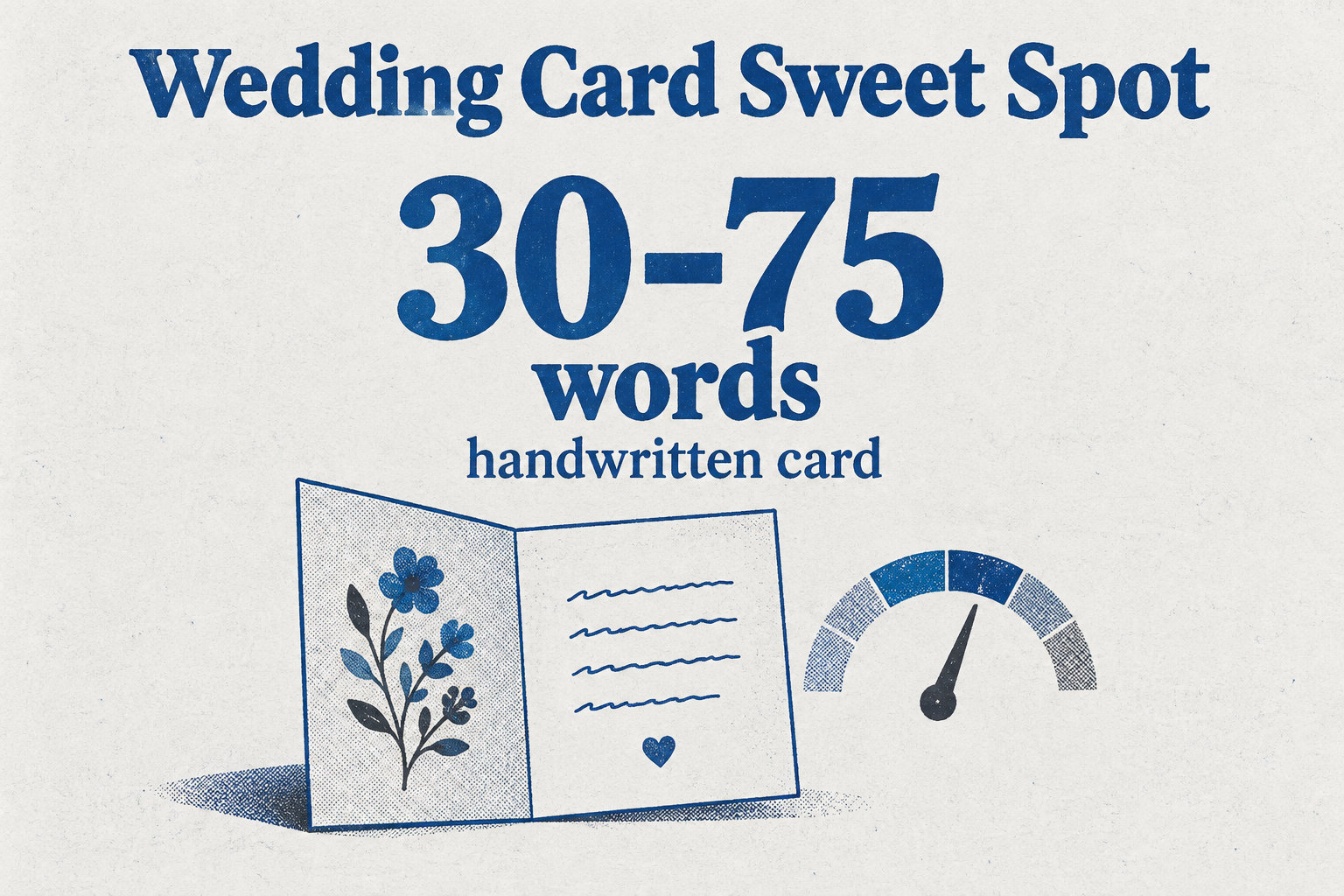
For a handwritten card, three to five sentences is the sweet spot. That is roughly 30 to 75 words. A close family member can write a little more. A colleague usually needs only two or three sentences.
For the sign-off, “With love,” “Lots of love,” “Warmly,” “Best wishes,” and “So happy for you both” all work well. Choose the one that matches your relationship, then add your full name.
Start With Both Names
Use both partners’ first names. This is true even if you only know one of them well. It makes the message feel written to the couple as a pair.
Let your relationship and the celebration set the tone. “Congratulations on your marriage” suits a formal card. “We’re so happy for you two” is better for close friends.
Avoid assumptions about surnames. Use first names, both existing surnames, or simply “the newlyweds.” This sidesteps the risk of getting it wrong.
Keep the focus on their day and their future together, not on your own wedding memories. The card is about them.
Ready-to-Use Wording and What to Leave Out
For a traditional card, you can write: “Congratulations on your marriage. Wishing you both a lifetime of love, happiness, and wonderful memories together.”
Some subjects are best avoided. These include divorce, money, former partners, family tensions, pregnancy, and any suggestion that one partner is “settling.” Private in-jokes can also land awkwardly when relatives read the card.
Short, Heartfelt Wishes Need One Specific Detail
Keeping It Brief
When space is tight, a simple line does the job. Try this: “Congratulations to you both. Wishing you a lifetime of love, laughter, and happiness.”
A quick message can be just as warm. For example: “So happy for you two. May this first day of marriage lead to many joyful years together.”
Keep it to one or two sentences. Add one specific detail: the ceremony, a shared memory, or something you admire about them.
Swap general praise for one thing you have actually seen. “You make each other laugh” works. So does “You listen when things get hard” or “You bring out each other’s adventurous side.”
A reliable formula has three parts. Mention one moment. Explain what it showed about them. Then name what you hope their marriage brings.
Matching the Message to the Format
The format sets how much room you have. A card leaves space for a fuller memory and a proper sign-off. A text message should be quick and easy to reply to.
A social post needs care. Avoid private details the couple has not shared publicly.
You can also personalise a familiar phrase with a concrete ending. For example: “Wishing you a lifetime of love and laughter, especially during your Sunday hikes and fiercely competitive board-game nights.”
For a formal card, “Congratulations on your marriage” works well. For close friends, try “We’re so happy for you two.”
Friends, Family, and Colleagues Each Need a Different Tone
With a friend, tie the wish to a moment you shared. Try this: “I still remember you telling me about your first date. Seeing you marry the person who makes you so happy means everything.”
With a colleague, keep it warm but professional. Try this: “Congratulations on your wedding. Wishing you and your partner every happiness in the years ahead.”
With an acquaintance, two or three sentences are plenty. Try this: “Congratulations on your wedding. Wishing you both a happy and fulfilling life together.”
Parents can combine pride and hope. They might write: “We are proud of the person you have become. We are delighted to see you build a life with a partner who respects and loves you.”
Humour, Faith, and Quotations Suit Particular Couples
Funny Wishes
A joke works when you know the couple enjoys that style and would take it as affection. Keep it on shared habits, not weaknesses or sensitive subjects. If a joke needs explaining, leave it out.
Faith-Based Wishes
For a religious couple, you might write: “May God bless your marriage with patience, joy, wisdom, and a love that grows through every season.” The wish is warm and easy to say aloud. It names the blessing plainly.
Use faith-based language only when it reflects the couple’s beliefs or the ceremony. If you are unsure, choose a warm, non-denominational wish instead.
Quoted Wishes
Choose a quotation because its idea fits the couple, not just because it mentions love. A short line about friendship, patience, partnership, or growing together usually works best.
Anne Bradstreet’s “To My Dear and Loving Husband” and Jane Hirshfield’s “A Blessing for Wedding” are possible choices for wedding readings.
Quote the wording exactly. Name the author, and give the title if there is room. A famous line given to the wrong writer is an easy mistake to avoid.
Before you sign, reread your draft as the couple’s parents or a colleague would, and check that every line suits the relationship you actually have with them.
Frequently Asked Questions
What do you say instead of congratulations for a wedding?
Try “I’m so happy for you both” or “Best wishes for your life together.” Both mark the day without repeating the word congratulations.
It suits a card or a speech where you want a warm, slightly formal tone. In a text, a shorter line like “So happy for you both” reads more naturally.
How do you say warm congratulations?
Try “Warmest congratulations to you both on your wedding. We’re delighted to celebrate this beautiful day with you.”
The second sentence shares the celebration. Add “and wish you every happiness in the years ahead” to finish the message on a wish for the future.
What do you say to a couple that’s getting married?
Wish them well for the day and the marriage ahead, since they are not married yet.
“Best wishes” and “So happy for you both” work before the ceremony. Wish them well for the day and the marriage ahead, since they are not married yet.
Read next: Renting a Limo: What the Price Actually Covers and What It Doesn't