
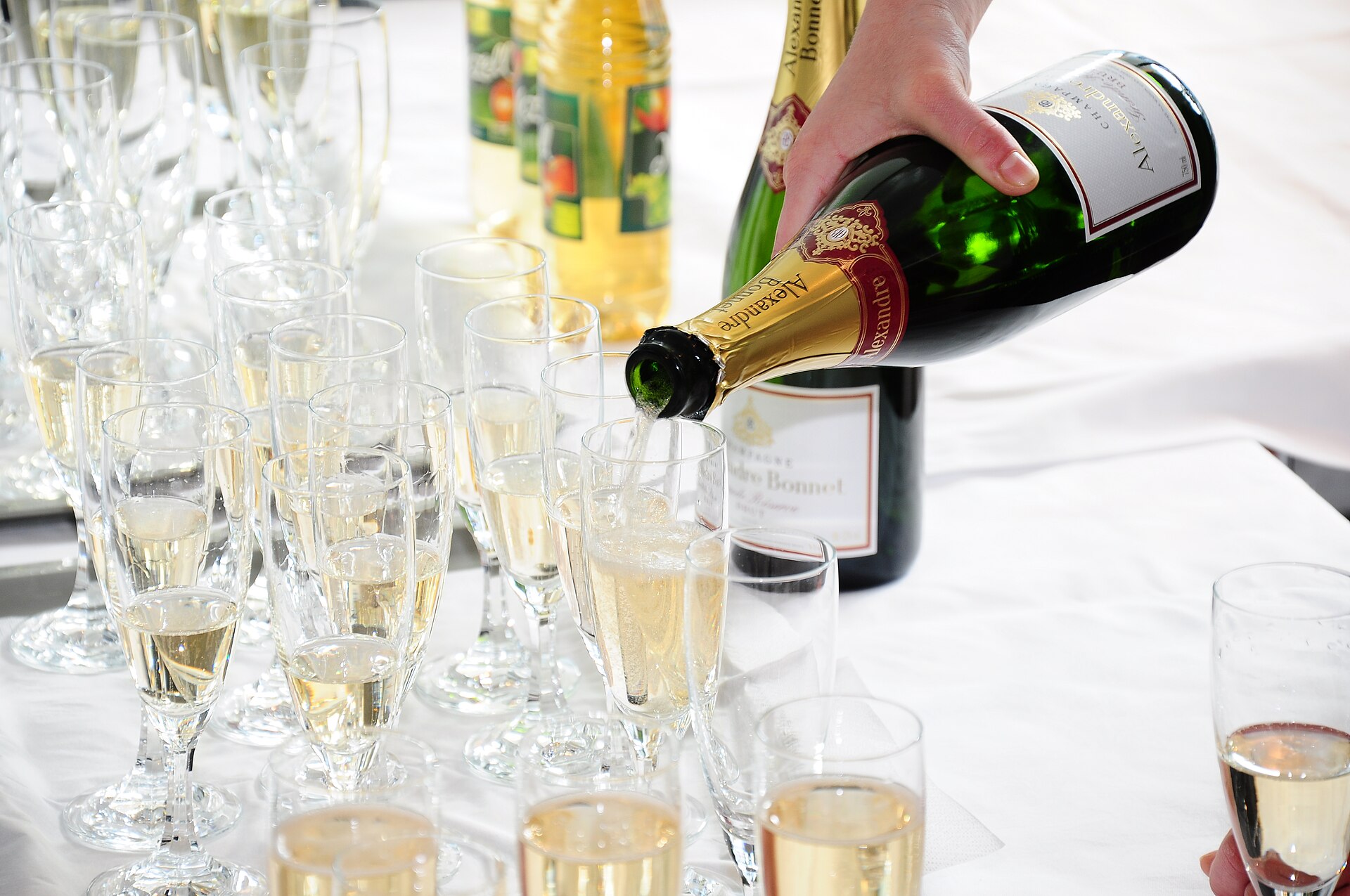
The glass in your hand during the toast is one of the few objects that appears in nearly every photograph of the day. It shapes how the wine smells, how long the bubbles last, and how cohesive the table looks. This guide explains why each style behaves the way it does, so you can choose with reasons rather than guesswork.
- Flutes, coupes and tulip glasses each trade bubbles, aroma and look differently.
- Engraving is limited by the product and the maker, so check the rules before you design.
- The toast works best when the glasses, ice and timing are planned around your vehicle schedule.
Why does the shape of the glass matter for a toast?
A sparkling wine glass does three jobs at once. It holds the bubbles, it carries the aroma to your nose, and it gives guests something that looks balanced in a hand and on camera. Shape controls the first two directly. A narrow opening keeps carbonation lively for longer, while a wide opening lets the wine breathe and the bubbles fade sooner.
This is the reason to decide what you are pouring before you choose the glass. A crisp, high-energy sparkling wine benefits from a shape that protects its fizz. A softer, more aromatic style may deserve a shape that lets the scent open up. Starting from the drink, rather than from the look, prevents most disappointments.
Flute, coupe or tulip: which one suits your wedding?
The classic flute
The flute is tall and narrow, which is why it is the default for toasts. The slim bowl keeps the stream of bubbles visible and helps the wine stay lively across a long speech. It also reads clearly in photographs because the rising bubbles are easy to see. The trade-off is that the narrow opening gives you less aroma.
The coupe
The coupe is wide and shallow. It has a vintage, celebratory look and suits a styled table with a retro or glamorous theme. Because the surface area is large, bubbles disappear faster, and the wide rim makes it easier to spill when guests are standing and moving. It works best when the toast is short and the pour is small.
The tulip-shaped stem
The tulip sits between the two. The bowl is rounder in the middle and narrows toward the rim, so it concentrates aroma better than a flute while still holding bubbles better than a coupe. If your guests care about the wine itself, this is the sensible compromise.
Prosecco and non-alcoholic options
Lighter, fruitier sparkling wines tend to suit a tulip or a flute, since both keep the fizz and let some fruit character through. For guests who are not drinking alcohol, serving the alternative in the same glass style matters more than the drink itself. A matching glass means nobody is singled out at the moment of the toast.
Does material change how the glasses look in photographs?
Clear glass photographs best because it shows the colour of the wine and the movement of the bubbles. Thick, heavily tinted or very frosted glass hides both and tends to look flat under flash or in dim evening light. Thin-walled, clear stems also feel better in the hand, which affects how naturally guests hold them when the camera comes out.
Consistency matters as much as quality. A mismatched collection of glasses breaks the visual flow of the toast, even if each one is attractive on its own. If you are mixing sources, keep the shape and height the same so the group reads as a set.
- Choose clear glass over heavily tinted options.
- Keep height and bowl shape uniform across all guests.
- Check how a sample looks near a window and under indoor lighting before committing.
How does engraving work, and what should you check first?
It helps to understand how engraving works before you design. One personalisation service describes it as etching slightly into the surface, so it is not an applied colour: the material decides the look, and on glass the engraving typically appears white.
Product limits vary, so read them closely. On the personalised flutes from that same service, only one engraving area on the front can be personalised, and the system accepts regular letters, numbers and standard punctuation rather than symbols or special characters. Logos and fully custom designs go through a business department for bulk orders. The same maker lists a flute with a height of 21.5 cm and a volume of 21 cl, which is a useful reference point when you are judging how a flute holds a toast-sized pour.
Plan the timing generously. Production and delivery times differ by maker, so look at the dates shown on the product page and leave room for a replacement if a name is misspelled. Proofread every line aloud before you confirm, and have a second person check the spelling of names.
How do the glasses fit into a limo-day timeline?
If a limousine is part of the wedding day, the toast often happens at a transition point: after the ceremony, on the way to photographs, or on arrival at the reception. The right plan depends on what your chauffeur and the vehicle allow, so confirm the rules for drinks and glassware before the day rather than on it.
Glassware in a moving vehicle needs thought. Stemmed glasses are fragile and tip easily, so many couples keep the pour for a stop, or keep a sturdier set for the ride and use the engraved pair for the official toast at the venue. Carry glasses in a padded case, keep a cloth for fingerprints, and hand the set to a trusted person so it does not get lost between the car and the reception.
- Confirm drink and glassware policies with the limousine company in advance.
- Pack the toasting pair separately from the guest glasses.
- Decide who carries the glasses and who handles the pour.
- Keep a small towel and spare napkins within reach.
Frequently asked questions
Are flutes better than coupes for a wedding toast?
For most couples, yes. A flute keeps bubbles active longer and is easier to hold steady while standing. A coupe suits a styled, vintage look, but the wide rim means faster loss of fizz and more risk of spills.
Can I put a symbol or logo on engraved champagne glasses?
It depends on the maker. One service accepts only regular letters, numbers and standard punctuation in its online editor, with logos handled through a business department for bulk orders. Check the product page before you design.
What glass should I use for non-alcoholic sparkling drinks?
Use the same style as everyone else. A matching flute or tulip keeps the toast visually uniform, so guests who are not drinking alcohol are not set apart.
Related reading
- The Ultimate Guide to Renting a Limousine for Special Events
- Renting a Limo: What the Price Actually Covers and What It Doesn’t
Sources
- Personalized Champagne Flutes – Glasses | YourSurprise (yoursurprise.ca, accessed 2026-11-09)
Photo: Champagne pouring, by L.C. Nøttaasen, CC BY 2.0 (Wikimedia Commons)