
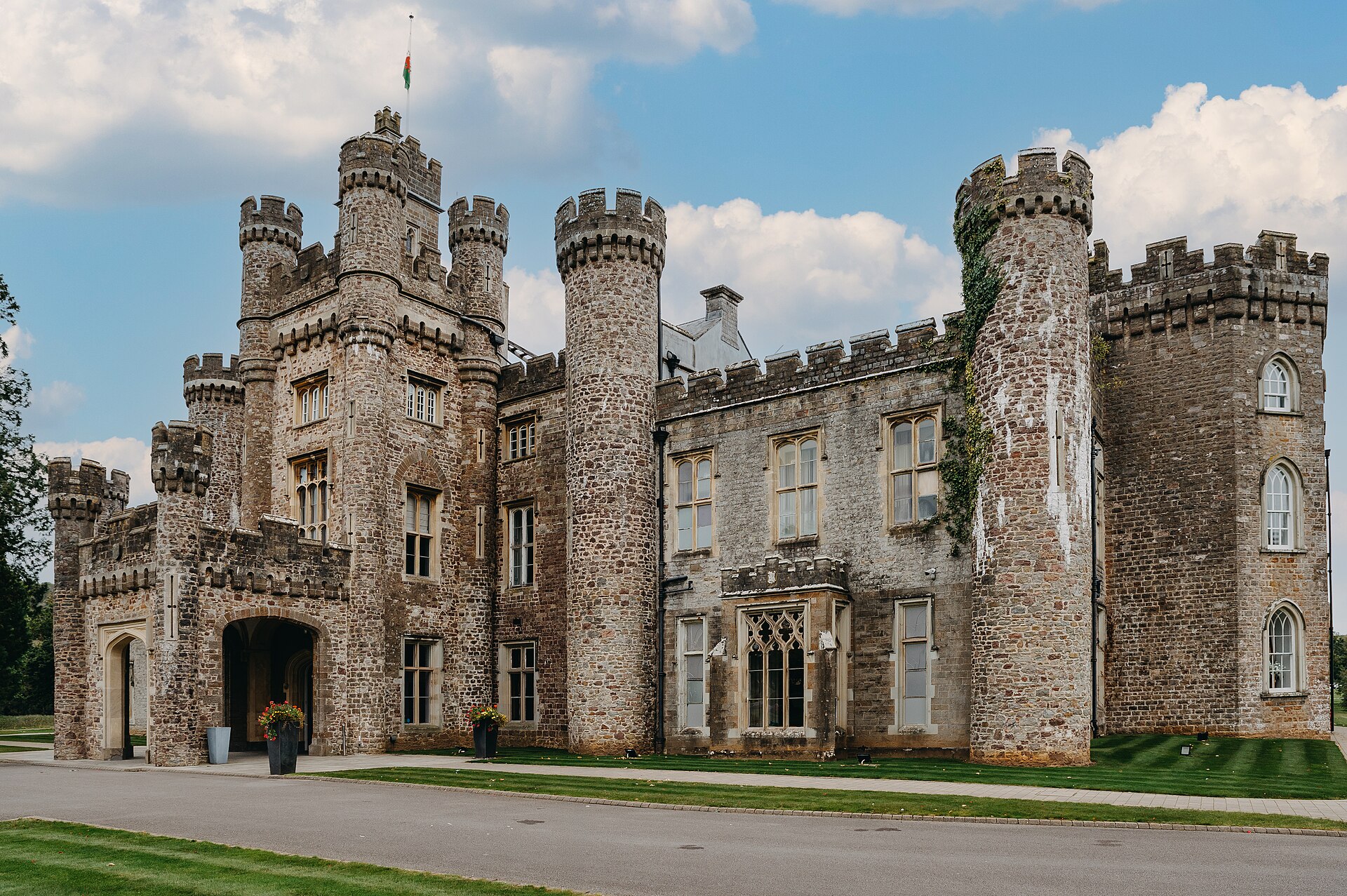
A castle can make a wedding feel like an occasion before a single guest arrives. The setting also brings practical questions that an ordinary banquet hall never raises: where the ceremony happens, who can stay on site, and how everyone gets there. This guide explains why those questions matter and how to answer them.
- Castles differ widely in what they allow, so check ceremony and reception rules early.
- Capacity, accommodation and travel time shape the day more than the architecture does.
- Ground transport is part of the plan, not an afterthought, especially in a rural setting.
What does a castle wedding actually involve?
The word castle covers very different properties. Some are working hotels that you can reserve in full, some are historic houses that rent out only certain rooms, and some are heritage monuments that offer a ceremony and little else. Understanding which type you are looking at is the first step, because it decides almost everything that follows.
Craigievar Castle in Aberdeenshire shows how this plays out. Built in 1576, it is a well-preserved example of Scottish Baronial architecture. Ceremonies can take place inside the castle, while receptions are best held in a marquee on the grounds. That split between the ceremony and the party is common, and it means you are planning two spaces rather than one.
Other venues go the opposite way. Ashford Castle in Ireland is now a five-star hotel set among 350 acres of grounds, and all of its 83 rooms can be booked for exclusive use. For a couple who wants privacy and everything under one roof, that is a very different proposition from a ceremony-only site.
Hluboká Castle in the Czech Republic is a ceremony-only venue. If you choose a place like that, you will need a separate plan for the reception, the meal and the evening.
How do you match a castle to your guest list?
Capacity is the practical limit that tends to surprise couples, because a large building does not mean a large guest allowance. Historic interiors are often protected, and the rooms that suit a ceremony may hold far fewer people than the grounds can.
Craigievar again offers a clear illustration: the in-castle ceremony is limited to 30 guests, while a marquee on the grounds can host 100. The same property serves two very different weddings depending on which format you pick.
Before you fall for a venue, work through a short list of questions:
- How many guests can attend the ceremony, and is that number different from the reception?
- Is there a weather alternative that feels like a real second option?
- Can the whole building be reserved, or only certain rooms?
- Where will guests sleep, and how far is that from the castle?
A smaller guest list is not a compromise here. Some planners specialise in short, intentional celebrations in historic castles, focused on atmosphere and emotion rather than an all-day programme. That format can suit a castle well, since the building does much of the work of setting the mood.
Does the region change the kind of castle you will find?
It does, and it is worth deciding on a region before you decide on a building. Scotland is estimated to have around 2,000 castles, which gives couples plenty of choice but also plenty to sort through. France’s Loire Valley offers Renaissance architecture, and Chambord there can be paired with a hotel inside its private estate for a more private event.
Not every castle-style venue looks medieval. In British Columbia, couples who want an Old World feel can look at Hatley Castle, which has the grandeur of a castle along with gardens and several different areas to use. Hycroft Manor in Vancouver is an Edwardian mansion with majestic columns and decorative detail, and its terrace looks toward the downtown skyline. If the aim is the atmosphere of a castle rather than strict authenticity, a manor or villa may give you more flexibility.
Season matters too. Nijo Castle in Kyoto has gardens that change through cherry blossom, summer foliage, autumn colour and winter snow, so the same venue looks very different depending on your date. Ceremony spaces there are limited, which is a reminder that the most photogenic places are often the most restricted.
How do you plan travel and transport around a castle venue?
Castles are rarely in the middle of a city. They sit on estates, on hillsides or at the end of long approaches, and that is part of their appeal. It also means the journey becomes part of the wedding, and it deserves the same attention as the flowers or the menu.
Distance is the first thing to measure. Hluboká Castle, for example, is just over an hour and a half from Prague, so guests arriving by air need a clear plan for the leg between the airport and the venue. Where a venue also offers on-site rooms, the transfer problem shrinks, but it does not disappear for the guests who stay elsewhere.
The reasoning is simple: a professional driver removes parking, navigation and the question of who is safe to drive after the reception. A few practical points help:
- Decide whether you need transport for the couple only, or for the wedding party and guests as well.
- Build in time for arrival at the venue, since photos and entrances rarely run to schedule.
- Confirm access to the castle approach in advance, because narrow or protected driveways can limit vehicle size.
- Plan the departure as carefully as the arrival, including the late-night return to accommodation.
A well-timed arrival also gives the couple a quiet moment before the ceremony, which tends to be the part people remember.
What should you confirm before you book?
Details change over time, so treat any guide, including this one, as a way to build a shortlist rather than as the final word. Capacities, packages and policies can shift, and the only reliable answers come from the venue itself.
When you contact a castle, ask for specifics in writing and compare them side by side:
- Which spaces are included, and which cost extra?
- What are the rules on music, curfews and noise?
- Are there restrictions on decoration, candles or outside suppliers?
- What happens if the weather turns on the day?
It also helps to know whether you are dealing with the property directly or through a planner. Some agencies select, negotiate and manage the venues they work with, which can simplify the process if you are marrying abroad. If you are planning from a distance, that kind of local knowledge can save a great deal of back and forth.
Finally, check the status of a venue before you fall for it. One winery in British Columbia that was once popular for weddings is now closed to them, though it can still be visited. A quick confirmation early on prevents disappointment later.
Frequently asked questions
Can you hold both the ceremony and reception at a castle?
It depends on the property. Some castles are hotels that can be reserved in full, so everything happens on site. Others allow a ceremony inside and a reception in a marquee on the grounds, and some offer a ceremony only.
How many guests can a castle wedding hold?
There is no single answer, because historic interiors often have strict limits. At one Scottish castle, an in-castle ceremony is limited to 30 guests while a marquee on the grounds can host 100. Always ask for ceremony and reception numbers separately.
Do you need a wedding planner for a castle venue?
It is not required, but it can help, especially for a destination wedding. Some agencies specialise in castles and manage the venue, design and logistics, which can be useful if you are planning from far away.
Why arrange transport for a castle wedding?
Castles are often far from main roads and city centres, so the journey affects the whole day. A chauffeured vehicle handles the route, parking and the late-night return, and lets you focus on the celebration.
Related reading
- The Ultimate Guide to Renting a Limousine for Special Events
- Budget-Friendly Helicopter Rides in Florida: Stunning Views Without the Price Tag
Sources
- European Wedding Venues in BC | honourandblessing.com (honourandblessing.com, accessed 2026-11-04)
- The most incredible castle wedding venues in the world (cntraveller.com, accessed 2026-11-04)
- Castle Wedding Expert in Central Europe | Wedding Planner (thecastle.wedding, accessed 2026-11-04)
Photo: Hensol Castle, South Wales, by TomZelinsky, CC BY 4.0 (Wikimedia Commons)